
The global beverage industry is currently navigating a period of unprecedented growth and diversification. As consumer demand for sparkling water, craft sodas, and carbonated energy drinks continues to soar, manufacturers are facing increasing pressure to enhance production efficiency without compromising product quality. At the heart of this manufacturing revolution lies the carbonated beverage filling machine—a masterpiece of industrial engineering designed to bridge the gap between high-speed output and the delicate physics of carbonation.
1. The Growing Demand for Advanced Carbonated Beverage Filling Machines
The surge in the carbonated soft drink (CSD) market is no longer limited to traditional colas. The rise of “better-for-you” sparkling beverages, functional carbonated drinks, and premium mixers has forced production facilities to seek more versatile and precise equipment. A modern carbonated beverage filling machine is no longer just a tool for liquid displacement; it is a critical guardian of product integrity, ensuring that carbon dioxide (CO2) levels remain stable from the mixing tank to the final sealed container.
For businesses looking to scale, investing in high-quality filling technology is the key to reducing product waste, minimizing downtime, and meeting stringent international food safety standards.
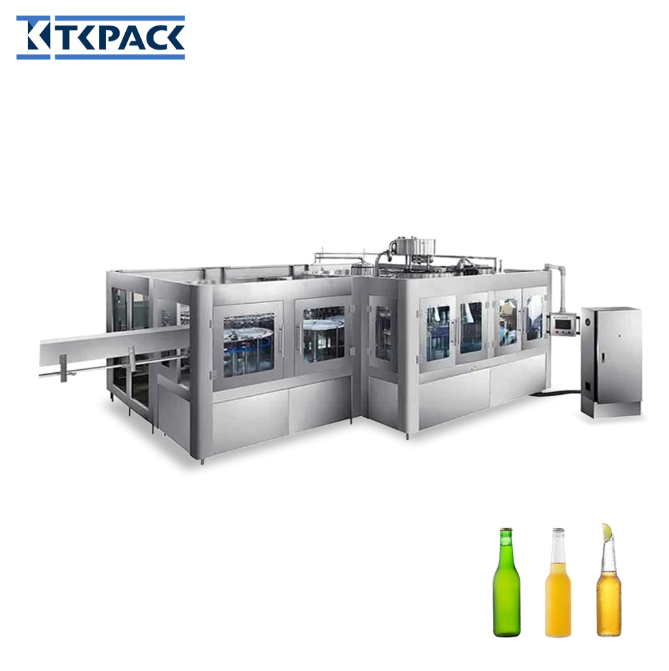
2. Understanding the Core Technology: The Isobaric Filling Principle
The primary challenge in filling carbonated drinks—unlike still water or juices—is the presence of dissolved CO2. Under standard atmospheric pressure, these gases would immediately escape, leading to excessive foaming and a “flat” product. To combat this, the carbonated beverage filling machine utilizes Isobaric (Equal Pressure) Filling technology.
How Isobaric Filling Works:
-
Pressurization: The empty bottle is sealed against the filling valve, and CO2 is injected into the bottle until the internal pressure matches the pressure in the beverage storage tank.
-
Liquid Entry: Once the pressures are equalized, the filling valve opens. Gravity allows the beverage to flow smoothly into the bottle. Because the pressures are balanced, the CO2 remains dissolved in the liquid, preventing foam.
-
Pressure Relief (Snifting): After the desired fill level is reached, the pressure inside the bottle is slowly released to the atmospheric level before the bottle is unsealed and moved to the capper. This “snifting” process is crucial to prevent the beverage from erupting out of the bottle.
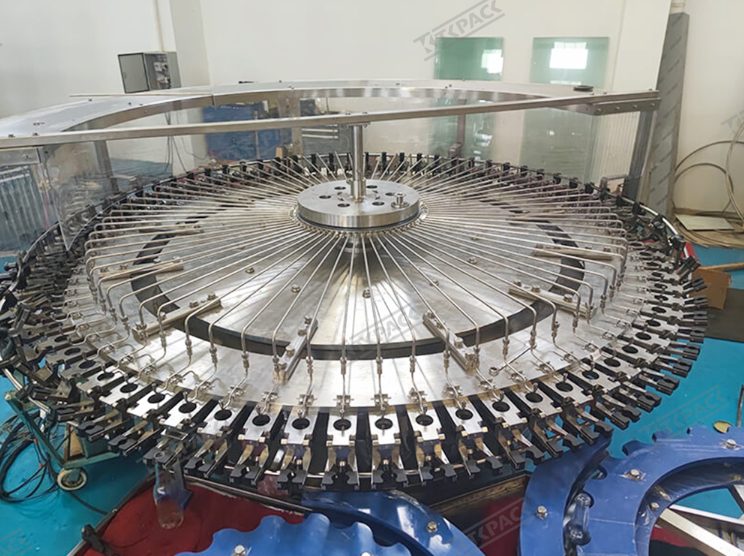
3. The 3-in-1 Monoblock System: A Modern Industry Standard
Space efficiency and hygiene are paramount in modern bottling plants. The industry has largely moved away from linear, separate machines toward the 3-in-1 Carbonated Beverage Filling Machine monoblock. This system integrates three vital functions into a single, synchronized unit:
I. The Rinsing Module
Before any liquid enters the container, the rinsing station uses high-pressure nozzles to clean the interior of the bottles. This ensures that any dust or micro-particles are removed. Modern machines often use sterile water or ionized air, significantly reducing the risk of microbial contamination.
II. The Filling Module
This is the “engine room” of the system. A high-quality carbonated beverage filling machine features precision-engineered valves that control the flow rate with millimetric accuracy. The use of advanced sensors ensures that every bottle is filled to the exact same level, which is vital for both consumer trust and regulatory compliance.
III. The Capping Module
The final step is arguably the most critical for carbonated products. The capping station must apply the closure (whether it’s a plastic screw cap, a crown cork, or an aluminum lid) immediately after filling. Advanced machines utilize magnetic torque control to ensure that caps are tightened with consistent force—tight enough to hold the pressure, but not so tight that the threads are damaged.

4. Key Components and Material Excellence
To withstand the acidic nature of many carbonated soft drinks and the rigorous cleaning cycles required in food production, the material composition of a carbonated beverage filling machine is non-negotiable.
-
Stainless Steel Construction: Industry-leading machines are constructed using SUS304 or SUS316L stainless steel. These materials offer superior corrosion resistance and are easy to sanitize.
-
High-Precision Filling Valves: The valves are often made with food-grade EPDM or specialized polymers to ensure a perfect seal during the pressurization phase.
-
Transmission Systems: Modern lines use “neck-handling” technology for PET bottles, which reduces the need for height adjustments when switching between different bottle sizes, thereby increasing operational flexibility.
5. Technical Innovations Shaping the Future
As Industry 4.0 permeates the manufacturing sector, carbonated beverage filling machines are becoming smarter and more autonomous.
-
PLC and HMI Integration: Programmable Logic Controllers (PLC) allow operators to monitor every aspect of the filling process—from tank pressure to individual valve performance—via a user-friendly Human-Machine Interface (HMI).
-
Automatic CIP (Clean-in-Place): Hygiene is automated through CIP systems that circulate cleaning agents through the filling valves and tanks without the need for manual disassembly. This drastically reduces downtime between flavor changes.
-
Energy Efficiency: New motor technologies and optimized pneumatic systems have reduced the carbon footprint of these machines, aligning with global sustainability goals.

6. Critical Factors Affecting the Stability of Carbonated Filling
To achieve the highest efficiency with a carbonated beverage filling machine, manufacturers must control several environmental and physical variables. Even the most advanced machinery can underperform if these factors are neglected.
Temperature Control
The solubility of CO2 is inversely proportional to temperature. Most high-speed production lines operate at temperatures between 0°C and 4°C. Chilling the beverage reduces the internal pressure required to keep the gas dissolved, which significantly minimizes foaming during the “snifting” or pressure-release phase.
Consistent Tank Pressure
The carbonated beverage filling machine relies on a stable pressure differential. If the pressure in the filling tank fluctuates, it leads to inconsistent fill levels across the production batch. Modern systems utilize electronic pressure transducers to maintain a constant CO2 blanket above the liquid.
Beverage Deaeration
Before carbonation and filling, it is essential to remove dissolved oxygen from the water. Oxygen not only affects the shelf life and flavor of the drink but can also cause turbulence during the filling process, leading to instability in the carbonation levels.
7. Selecting the Right Carbonated Beverage Filling Machine
Choosing the correct equipment is a strategic decision that affects your ROI for years. Consider the following criteria during the selection process:
-
Production Capacity (BPH): Define your output requirements in Bottles Per Hour (BPH). Small-scale craft producers might start at 2,000 BPH, while industrial giants require machines capable of 24,000 BPH or more.
-
Bottle Versatility: Does your machine need to handle PET, glass, or aluminum cans?. While 3-in-1 monoblocks are efficient, ensure the gripper and capping systems are compatible with your specific container shapes and neck sizes.
-
Automation Level: For regions with high labor costs, a fully automated carbonated beverage filling machine with integrated inspection systems (to detect under-filled or miscapped bottles) is indispensable.
8. Maintenance Strategies for Long-Term Performance
A carbonated beverage filling machine is a significant investment that requires disciplined upkeep to prevent costly downtime.
Preventive Maintenance
Regularly inspect all moving parts, including the star wheels, conveyors, and filling valves. Lubrication of mechanical bearings should follow the manufacturer’s schedule strictly using food-grade lubricants.
Seal and Gasket Replacement
Given the constant pressure cycles, seals and gaskets are the most common wear items. A proactive replacement strategy ensures that the machine remains airtight and prevents CO2 leakage, which could lead to “flat” beverages.
Software Calibration
As parts wear slightly over time, the PLC timing for valve opening and closing may need calibration to maintain the precise filling levels required for high-speed operations.
9. Conclusion: The Competitive Edge of High-Quality Filling
In the crowded beverage market, consistency is the hallmark of a successful brand. Utilizing a state-of-the-art carbonated beverage filling machine ensures that every bottle delivered to the consumer maintains its intended carbonation, flavor, and hygiene. By understanding the isobaric principle, investing in 3-in-1 technology, and maintaining strict temperature controls, manufacturers can achieve maximum throughput with minimal waste.

Frequently Asked Questions (FAQ)
Q1: What is the main difference between a still water filler and a carbonated beverage filling machine?
A: A still water filler typically uses gravity or vacuum filling at atmospheric pressure. In contrast, a carbonated filler uses isobaric (equal pressure) technology to manage CO2 levels and prevent foaming during the filling process.
Q2: Why is the beverage usually chilled before the filling process?
A: CO2 is more stable in cold liquids. Chilling the beverage to 0°C–4°C allows for a faster filling speed and more stable carbonation, reducing the risk of product eruption when the bottle is unsealed.
Q3: Can one carbonated beverage filling machine handle both PET and glass bottles?
A: While possible with significant changeover kits, it is generally recommended to use machines optimized for one material. Glass and PET require different handling mechanisms, capping pressures, and safety shielding.
Q4: What are the common causes of excessive foaming during filling?
A: Excessive foaming is usually caused by high beverage temperatures, incorrect pressure settings in the filling tank, air leaks in the supply lines, or improper deaeration of the water before carbonation.
Q5: How does a Clean-in-Place (CIP) system work in these machines?
A: A CIP system circulates cleaning and sanitizing solutions through the machine’s internal pipes, valves, and tanks in a closed loop. This ensures high hygiene standards without the need for time-consuming manual disassembly.