
What Is a Juice Filling Machine?
A juice filling machine is a piece of equipment designed to accurately dispense and fill bottled juice products. It typically includes components for bottle positioning, liquid level control, volumetric measurement, nozzle filling, and often integrates with capping, labeling, and conveyor systems. Juice filling machines vary in design, ranging from small tabletop units for pilot production runs to large automated juice filling lines for high‑volume commercial operations.
Because juice products often contain pulp and particles, selecting a machine with appropriate pump systems and sanitizable contact parts is critical to ensure consistent fill volumes and hygiene compliance.
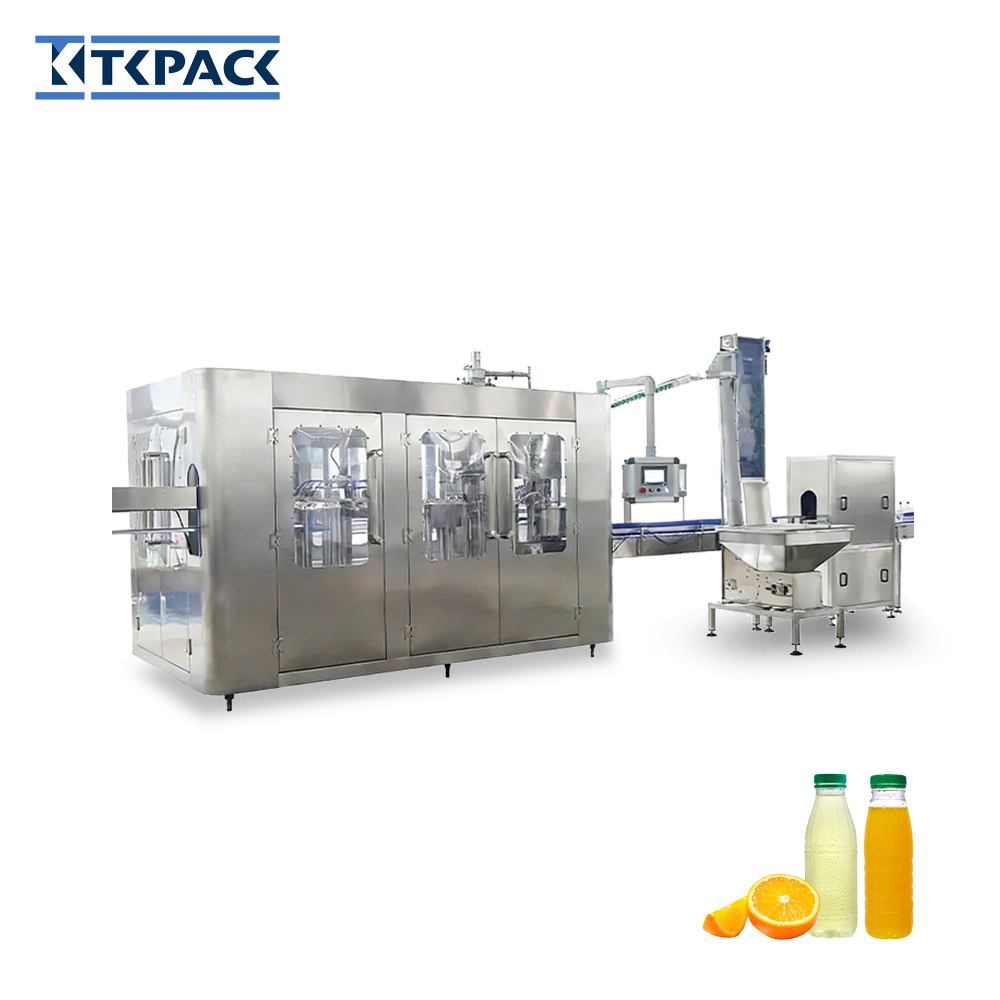
What Is a Juice Filling Line?
A juice filling line refers to a complete production sequence where bottles move through a series of automated stations. A typical juice filling line includes:
- Bottle unscrambler or feeder
- Rinsing or sterilizing station
- Juice filling machine
- Capping or sealing machine
- Labeling machine
- Shrink wrapping or packaging station
- Conveyor systems
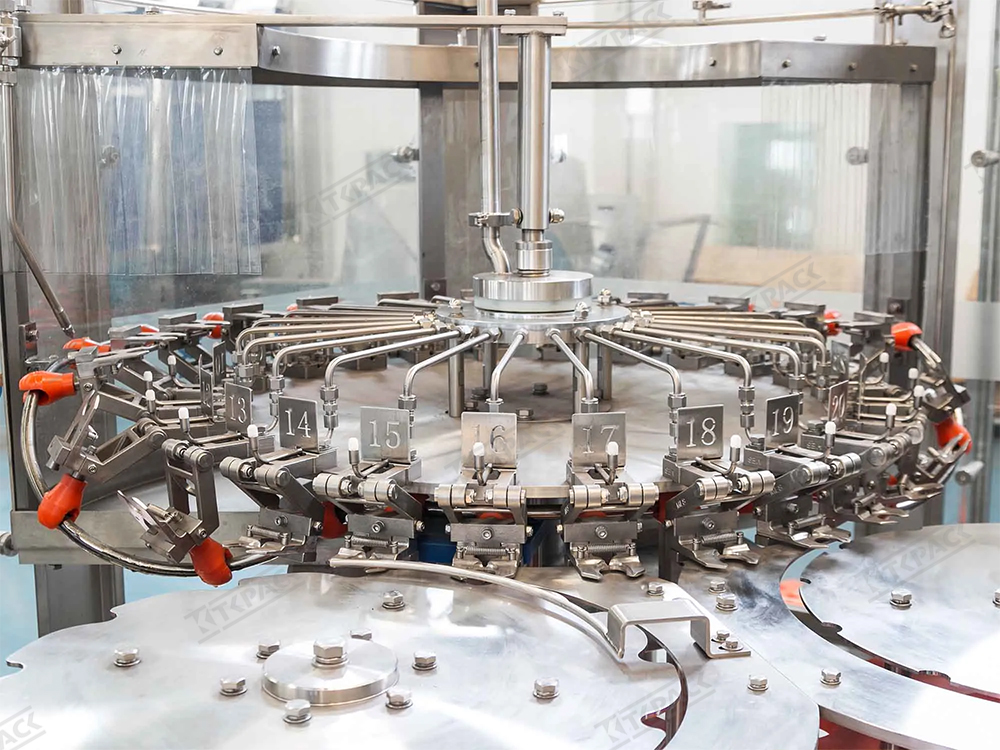
Semi‑Automatic Juice Filling Machine: Features and Benefits
1. Cost‑Effective Entry Option
Semi‑automatic juice filling machines are usually more affordable than automated lines. They allow small and medium‑sized producers to start juice bottling without heavy investment. These machines provide reliable fill accuracy and are often manually loaded or partly assisted by simple conveyors.
2. Flexibility for Small Batches
For seasonal products, limited edition juices, or small batch testing, a semi‑automatic unit offers flexibility. Changeovers and setup times are shorter, and operators can adjust fill volumes easily without complex programming.
3. Simple Operation and Maintenance
Semi‑automatic machines are often simpler to operate and maintain compared to full lines. Because fewer mechanical parts are involved, cleaning and troubleshooting tend to be straightforward, which is an advantage for facilities with limited technical staff.
4. Space‑Saving Design
These machines typically have a smaller footprint, making them suitable for facilities with limited floor space, pilot plants, or co‑packing operations. They can serve as a stepping stone to full automation as production scales up.
Limitations:
- Lower production capacity
- Requires manual labor for bottle loading/unloading
- Limited integration with other packaging systems
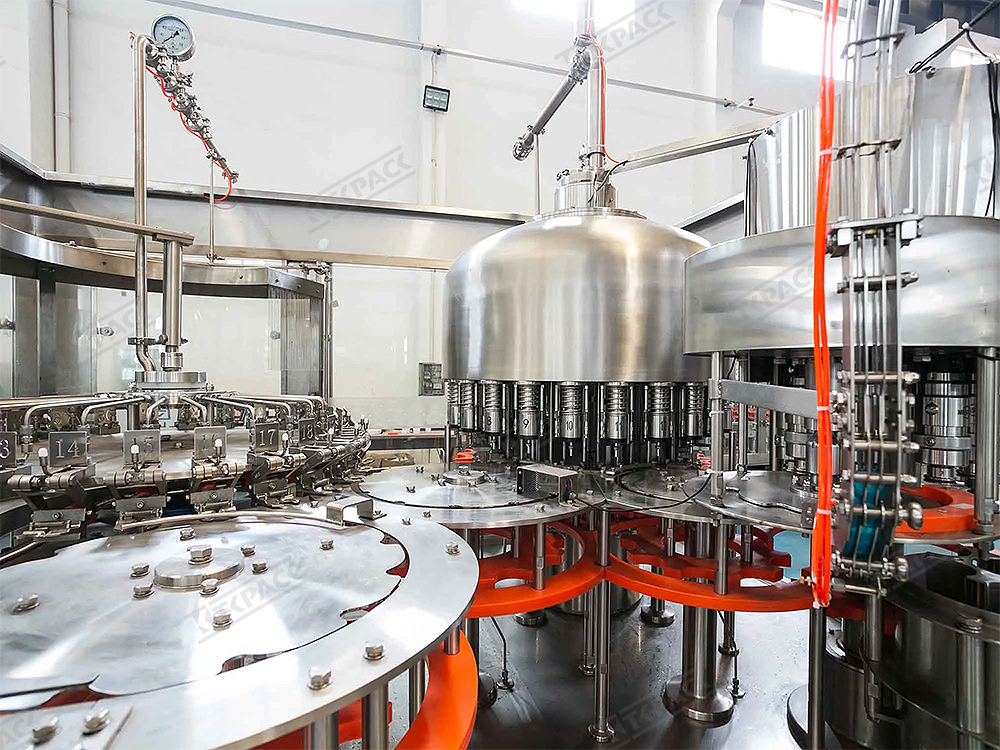
Automatic Juice Filling Line: Features and Benefits
1. Minimal Manual Labor
Automation reduces reliance on manual operators. After initial setup and programming, the line runs continuously with only periodic supervision. This results in labor cost savings and fewer human errors.
2. Integrated Production Process
Automatic juice filling lines can be seamlessly linked with bottle rinsing, capping, labeling, and packaging stages. This integration streamlines operations, improves workflow, and ensures synchronized speeds across the entire production process.
3. Enhanced Product Quality Control
Advanced automatic lines often include sensors, vision systems, or in‑line quality checks that verify fill levels, cap torque, and bottle orientation. These systems help reduce defective units and improve overall product quality.
Limitations:
- Higher initial investment
- Requires trained technicians for maintenance
- Larger factory floor space needed
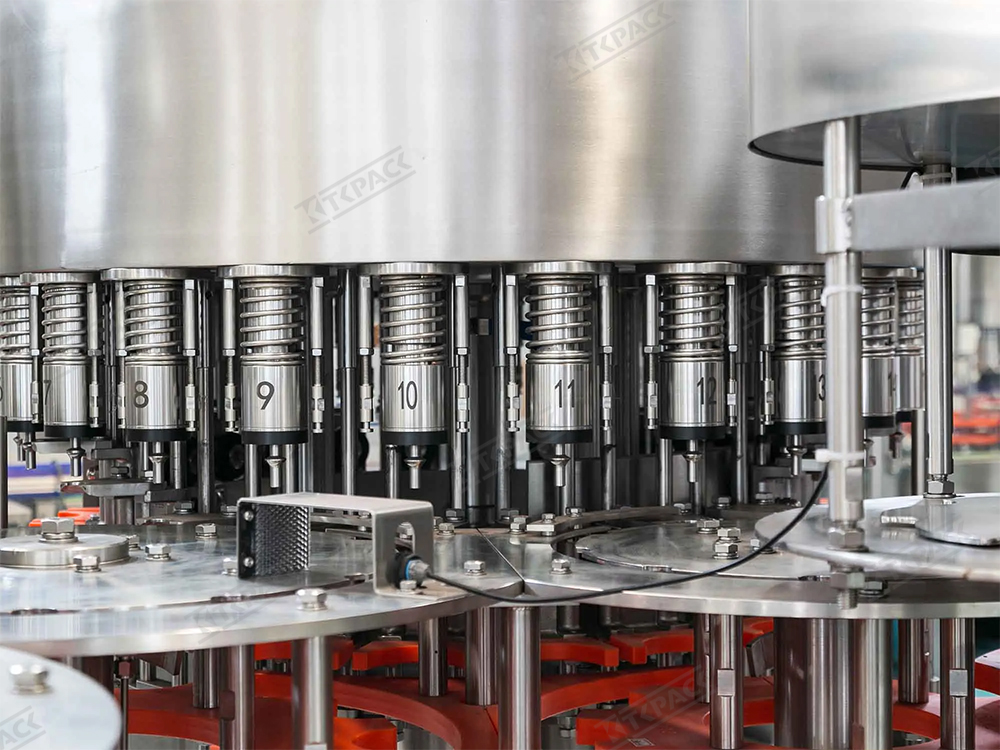
Head‑to‑Head Comparison
| Feature | Semi‑Automatic Juice Filling Machine | Automatic Juice Filling Line |
|---|---|---|
| Initial Cost | Low | High |
| Production Capacity | Low to Moderate | High |
| Labor Requirement | Medium | Low |
| Automation Level | Manual to Semi‑Automatic | Fully Automatic |
| Integration with Other Machines | Limited | Seamless |
| Ideal For | Small Batches, Startups | Large Scale Production |
| Space Requirement | Small | Large |
How to Choose the Best Solution for Your Business
Selecting the right juice filling system depends on your business goals, annual production volume, and budget:
1. Define Your Production Goals
If you are launching a new juice product and expect seasonal or small batch runs, a semi‑automatic juice filling machine may suffice. However, if you aim to scale quickly and supply major retailers, investing in an automatic juice filling line will future‑proof your operations.
2. Consider Your Budget and ROI
While semi‑automatic equipment is budget‑friendly, an automatic line can deliver faster ROI through labor savings and increased throughput. Calculate long‑term operational costs rather than just the purchase price.
3. Evaluate Floor Space and Workflow
Automated lines require more floor space and a clear workflow plan. Ensure your facility layout accommodates conveyors, bottle buffers, and safety zones.
4. Check After‑Sales Support
Look for suppliers who offer installation, training, spare parts, and technical support. A reliable partner can help keep your juice filling machine or juice filling line running at peak performance.
Conclusion
Both semi‑automatic and automatic juice filling systems have important roles in modern beverage production. A semi‑automatic juice filling machine is perfect for smaller companies, test runs, or flexible production needs. On the other hand, a fully automatic juice filling line delivers scalable efficiency, reduced labor costs, and integrated process control for high‑volume manufacturers.
FAQ
1. What is the difference between a juice filling machine and a juice filling line?
A juice filling machine refers to a standalone unit that fills bottles with juice. A juice filling line refers to a complete set of integrated machines, including filling, capping, labeling, and conveyors, for continuous production.
2. Can a juice filling machine handle pulp or particulates in juice?
Yes, many juice filling machines are designed with special pumps or valves to manage thicker liquids and pulp. Always verify compatibility with your product before purchase.
3. Do automatic lines require more maintenance?
Automatic lines may require more technical maintenance due to their complexity, but reputable suppliers provide support, training, and parts to minimize downtime.
4. Is automation necessary for small juice companies?
Not always. Small companies may find a semi‑automatic juice filling machine more cost‑effective until production demand grows.
5. How can I improve the efficiency of my juice filling operations?
Consider integrating your filling machine with capping and labeling systems, optimizing bottle flow, and investing in operator training to reduce errors and downtime.