
When a customer asks us for a water filling machine, the first thing we usually say is: do not choose the machine only by the price or by the number of filling heads.
A bottled water project is not just about filling water into bottles. It involves your water source, bottle design, daily output target, cap type, label type, factory space, local labor cost, and future sales plan. A small difference in these details can lead to a very different equipment recommendation.
As a manufacturer of bottled water filling equipment, we normally guide customers step by step.
Step 1: Start with Your Water Product
Before discussing machine models, we need to know what kind of water you want to bottle.
For most bottled water factories, the product is one of the following:
Mineral water、Purified water、Spring water、Drinking water、Still water、Alkaline water
These products are usually non-carbonated and filled at room temperature. That means they do not require the same filling structure as carbonated drinks, juice, tea, or hot-fill beverages.
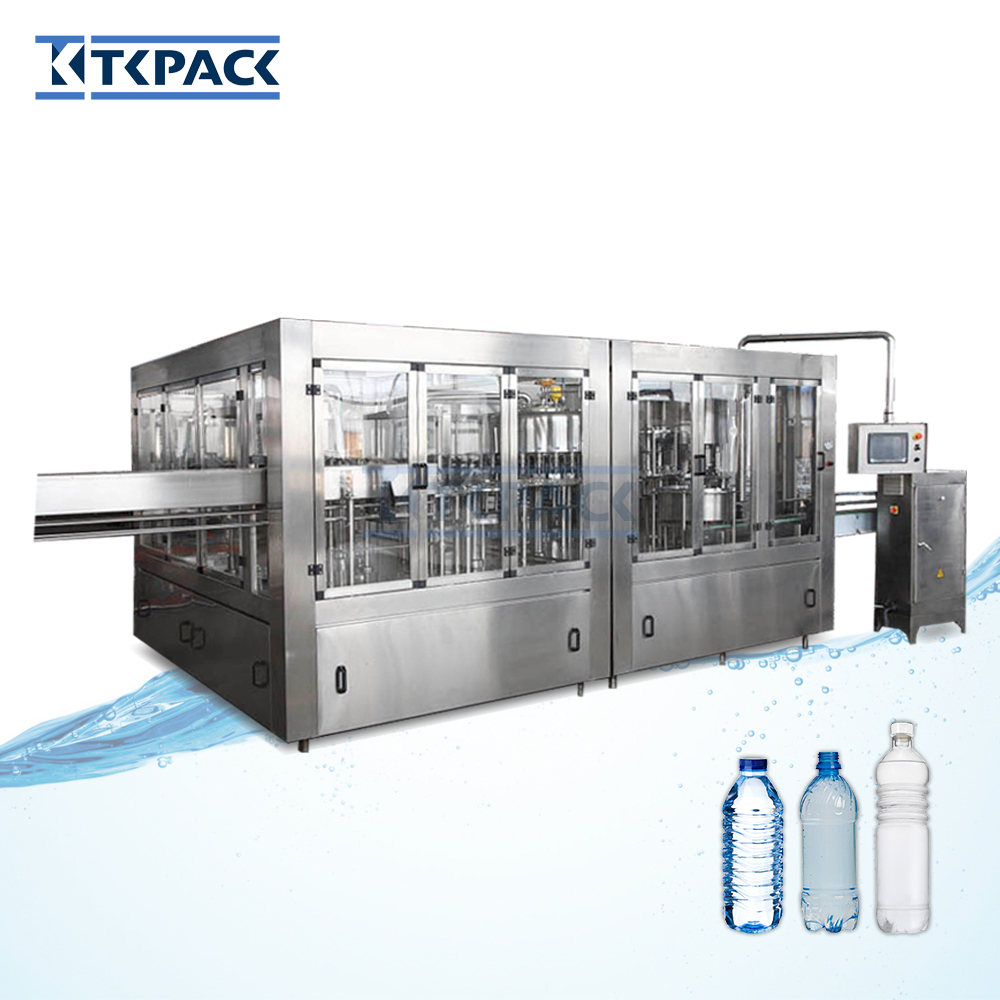
For this type of product, a standard automatic water filling machine is usually suitable. If you are using PET plastic bottles, the most common choice is a 3 in 1 water filling machine. This machine combines bottle rinsing, water filling, and screw capping in one synchronized system.
From a manufacturer’s point of view, this is often the most practical option for bottled water production because it saves floor space, reduces bottle transfer between machines, and keeps the whole filling process cleaner and more stable.
Step 2: Confirm Your Bottle Size and Bottle Shape
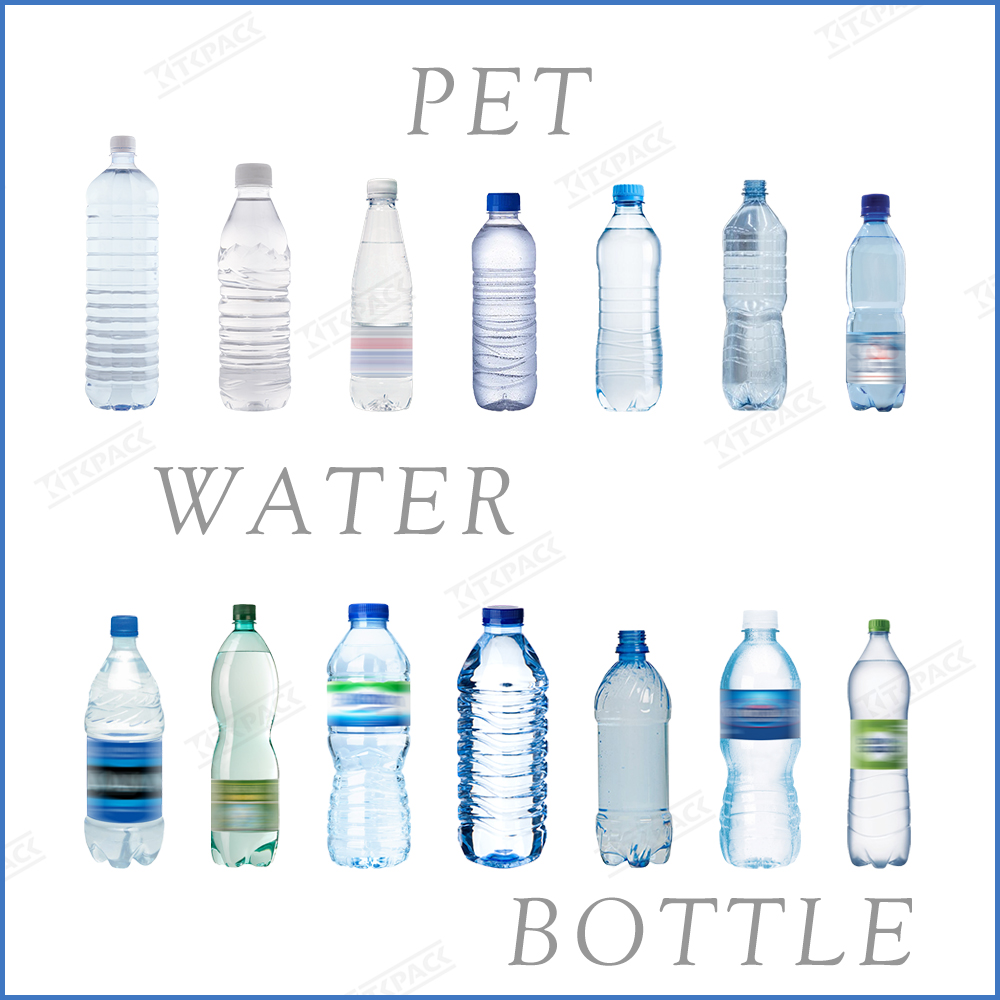
The next question is bottle specification. Many buyers only tell us, “I need a water filling machine for 500ml bottles.” But in real production, we also need to know the bottle height, diameter, neck size, cap size, and whether you plan to produce more bottle sizes later.
A standard bottled water filling machine is often used for 200ml to 2L PET bottles. Common formats include 330ml, 500ml, 750ml, 1L, 1.5L, and 2L.
If you only produce one bottle size, the machine configuration is easier. If you want to produce several bottle sizes on the same water filling line, then changeover convenience becomes important. The machine should allow adjustment for different bottle heights and diameters without making the operator’s work too complicated.
For customers who are just starting a bottled water business, we usually suggest choosing 2–3 main bottle sizes first. For example, 500ml for daily drinking, 1.5L for family use, and 330ml for hotels or events. This makes the first-stage investment more focused and helps the factory run more smoothly.
Step 3: Decide Whether You Need a Single Machine or a Complete Line
Some customers only need a filling machine because they already have water treatment, bottle blowing, labeling, and packing equipment. Other customers are building a new bottled water plant from zero. These two cases require different planning.
A single water filling machine mainly handles rinsing, filling, and capping. A complete water filling line may include the following sections: Water treatment system、Bottle blowing machine、Air conveyor、Bottle rinsing, filling, and capping machine、Cap feeding system、Labeling machine、Date coding machine、Shrink wrapping machine or carton packing machine、Conveyor system、Electrical control system
If your goal is to build a full bottled water factory, it is better to plan the complete water filling line from the beginning. The reason is simple: every machine must match the others.
Step 4: Match the Capacity with Real Sales Demand
Capacity is where many buyers make the wrong decision. Some choose a very small machine to reduce the initial budget, then find it cannot support market growth. Others choose a very large water filling machine, but their order volume is not enough to run it efficiently.
The better way is to calculate your expected daily production.
For example, if you plan to produce 40,000 bottles per day and run 8 hours per shift, your real hourly output should be around 5,000 bottles. But you also need to consider cleaning time, label changeover, worker breaks, and possible downtime. In that case, a machine with around 6,000–8,000 bottles per hour may be more reasonable than a 4,000BPH machine.
Here is a reference table for the CGF series 3 in 1 water filling machine:
| Model | Washing Heads | Filling Heads | Capping Heads | Production Capacity | Power | Overall Size |
|---|---|---|---|---|---|---|
| CGF8-8-3 | 8 | 8 | 3 | 2000–2500 bottles/hour | 2.5 kW | 1950×1450×2350 mm |
| CGF16-16-5 | 16 | 16 | 5 | 3000–4000 bottles/hour | 3.1 kW | 2400×1600×2400 mm |
| CGF18-18-6 | 18 | 18 | 6 | 6000–8000 bottles/hour | 3.1 kW | 2400×1830×2400 mm |
| CGF24-24-8 | 24 | 24 | 8 | 10000–12000 bottles/hour | 3.8 kW | 3100×2200×2400 mm |
| CGF32-32-10 | 32 | 32 | 10 | 12000–14000 bottles/hour | 5.6 kW | 3600×2500×2400 mm |
| CGF40-40-12 | 40 | 40 | 12 | 16000–18000 bottles/hour | 7.2 kW | 4000×2800×2400 mm |
| CGF50-50-15 | 50 | 50 | 15 | 22000–24000 bottles/hour | 9.6 kW | 5450×3210×2400 mm |
Step 5: Check the Rinsing, Filling, and Capping Design
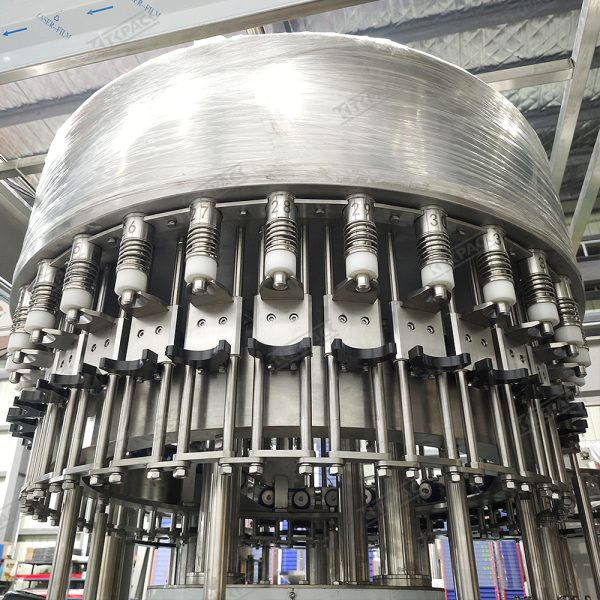
A good bottled water filling machine must do three things well: rinse the bottle, fill accurately, and cap securely.
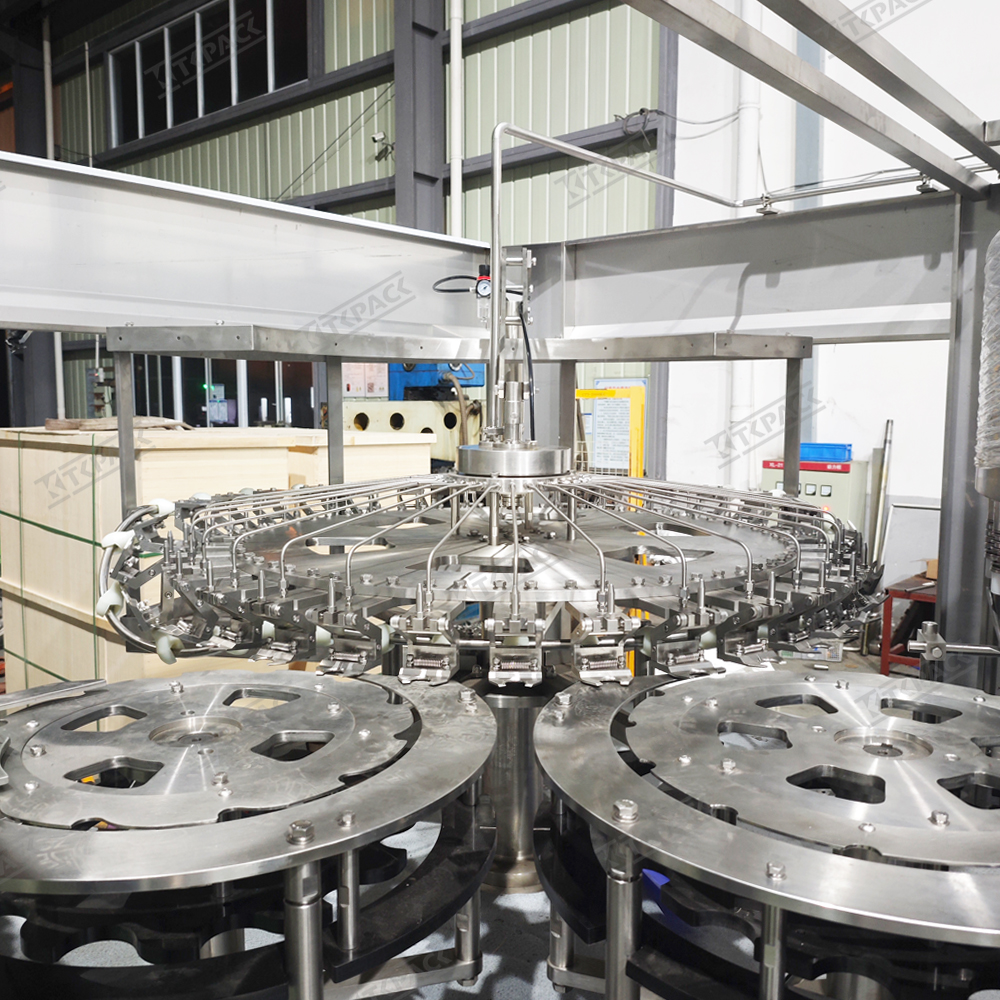
The rinsing section cleans the empty PET bottles before filling. In bottled water production, this step is very important because water is a direct-consumption product. The bottle clamp should hold the bottle neck firmly, rotate the bottle properly, and allow the nozzle to clean the inner wall effectively.
The filling section controls the water level. Buyers often focus on speed, but filling stability is just as important. If the liquid level is uneven, the finished product looks unprofessional. If the filling accuracy is poor, it may also increase product loss over time.
The capping section seals the bottle. Poor capping can cause leakage, loose caps, damaged caps, or customer complaints. For this reason, we always suggest checking the capping torque control, cap feeding stability, and cap sorting system before choosing a water filling machine.
Step 6: Pay Attention to Food-Grade Contact Parts
For bottled water production, the material of the parts that contact water matters. The filling tank, filling valves, pipes, and contact parts should be made of food-grade stainless steel. Many quality water bottling machines use 304 stainless steel, and some parts can be upgraded to 316 stainless steel depending on customer requirements.
The machine should also be easy to clean. Smooth surfaces, polished contact areas, and fewer dead corners help reduce hygiene risks. For a bottled water plant, cleaning convenience is not a small detail. It affects daily operation, production safety, and long-term machine reliability.
Step 7: Plan the Factory Layout Before Ordering
Before confirming the final machine model, you should prepare a simple factory layout. Even a rough drawing is helpful.
The layout should show the water treatment room, blowing area, filling area, labeling area, packing area, warehouse, operator passage, and power or water connections. Once we understand your space, we can help design the water filling line more accurately.
Step 8: Choose a Supplier Who Understands the Whole Project
When buying a water filling machine, price is important, but it should not be the only factor. A reliable supplier should help you choose the right model, design the line layout, match upstream and downstream equipment, provide technical documents, and support installation or training.
From a buyer’s point of view, you should ask the supplier these questions:
Which model do you recommend for my bottle size and capacity?
Can the machine handle future bottle size changes?
What equipment is needed for a complete water filling line?
What spare parts should I prepare?
How is the machine installed and tested?
What after-sales support is available?
Can you provide layout drawings and technical guidance?
A good manufacturer will not simply sell the biggest machine. The right recommendation should match your product, budget, market, and factory plan.
Final Recommendation
If you are producing PET bottled mineral water, purified water, spring water, or drinking water, a 3 in 1 water filling machine is usually the first option to consider. It combines rinsing, filling, and capping in one system and is suitable for most non-carbonated bottled water projects.
For small factories, start with a practical capacity and leave room for growth. For medium and large plants, focus on line balance, automation level, and long-term stability. For new projects, plan the complete water filling line instead of choosing each machine separately.
The best water bottling equipment is not always the most expensive one. It is the system that fits your bottle, capacity, factory layout, labor situation, and business plan.
If you are still comparing models, you can start from the water filling machine category and then discuss your bottle size, capacity target, and factory layout with the manufacturer. This will help you receive a more accurate equipment recommendation.
Related Product FAQ
1. What type of water can a 3 in 1 water filling machine produce?
A 3 in 1 water filling machine is suitable for non-carbonated bottled water products such as mineral water, purified water, spring water, drinking water, and still water. It is mainly used for PET plastic bottles.
2. What is the suitable bottle size for a bottled water filling machine?
Most bottled water filling machines are suitable for PET bottles from 200ml to 2L. If you need to produce several bottle sizes, the machine should be configured for convenient bottle changeover.
3. How do I choose the right capacity for a water filling line?
You should calculate your expected daily output, working hours, market demand, and future growth. Small factories may choose 2000–4000BPH, while medium and large plants may need 6000–24000BPH or higher.
4. What equipment is included in a complete water filling line?
A complete water filling line can include water treatment, bottle blowing, air conveying, rinsing-filling-capping, cap feeding, labeling, date coding, shrink wrapping or carton packing, and conveyor systems.
5. Can one water filling machine handle mineral water and purified water?
Yes. If both products are non-carbonated and use compatible PET bottles, one water filling machine can usually be used for mineral water, purified water, spring water, and drinking water production
Contact US
Email: [email protected]
Call/WhatsApp: +86-15168688886