
From the outside, carbonated and non-carbonated filling machines can look almost the same. Both may rinse bottles, fill them, and apply caps in one compact block. The real difference is what happens inside.
When buyers compare carbonated vs non-carbonated filling machines, pressure and temperature are the first things to look at. Carbonated drinks must retain dissolved CO2 without creating too much foam. Still water has no carbonation to protect. Juice and tea bring other concerns, especially filling temperature, hygiene, and product sensitivity.
The short answer is straightforward. Carbonated beverages normally need an isobaric or counter-pressure filler. A non-carbonated product needs a filling method chosen around the beverage itself. Water, juice, and tea may all be still products, but that does not mean they should use the same machine.
What Is a Carbonated Beverage Filling Machine?
A carbonated beverage filling machine is built for soda, sparkling water, carbonated juice drinks, and other products containing dissolved CO2.
CO2 stays in the beverage only while pressure and temperature remain under control. If the pressure falls too quickly—or the product is too warm—the gas starts leaving the liquid. The result is foam, unstable fill levels, and a drink that may not keep the intended carbonation.
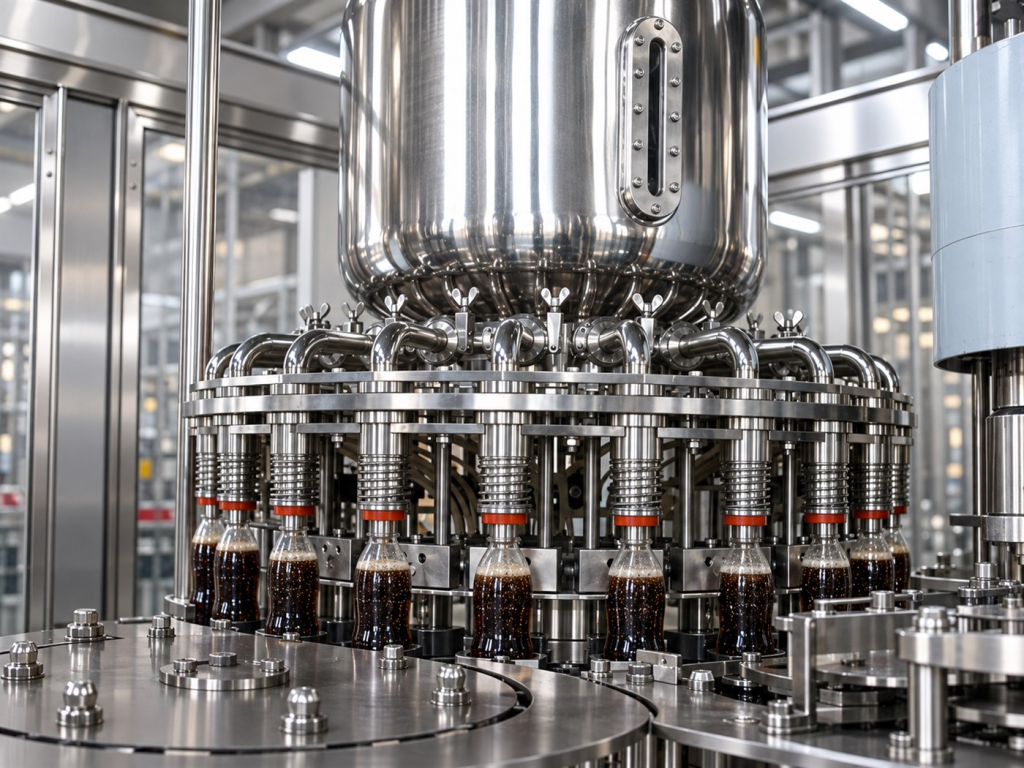
To avoid this, the machine pressurizes the bottle or can before the beverage enters. The pressure inside the container moves closer to the pressure in the product tank, allowing the liquid to flow with less sudden gas release. This is the basic idea behind balanced-pressure, isobaric, and counter-pressure filling.
The exact sequence varies by machine, but the goal is always the same: move the beverage into the container while keeping it stable.
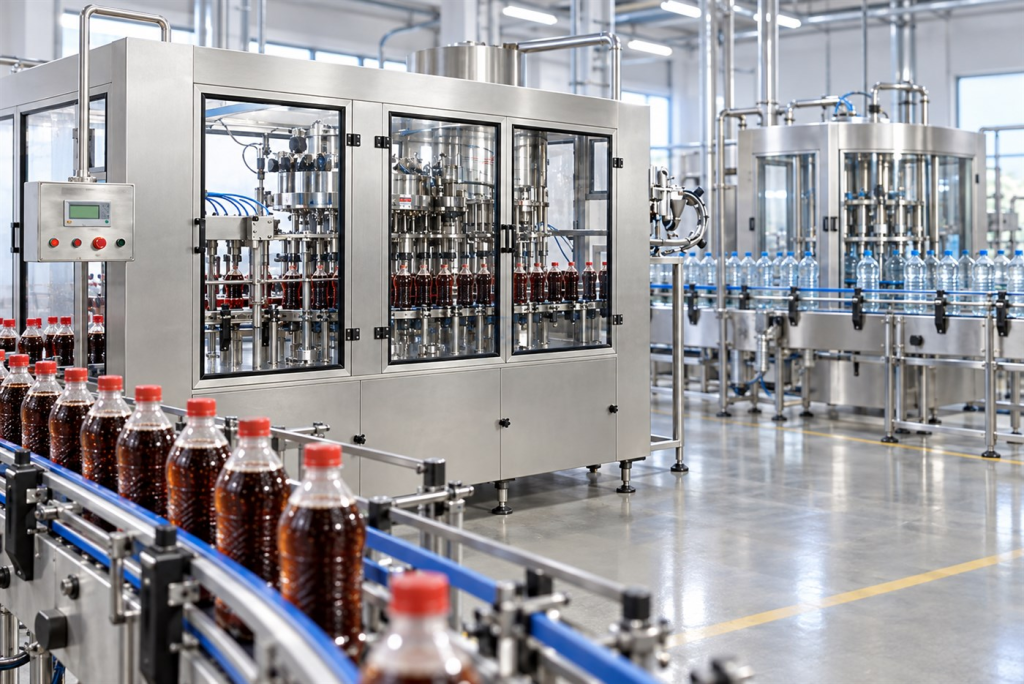
Thank Pack supplies carbonated soft drink filling machine models for different beverages and packaging formats. Mixing, carbonation, chilling, bottle blowing, labeling, packing, and conveying may all need to work together as a PET bottle carbonated drink filling line.
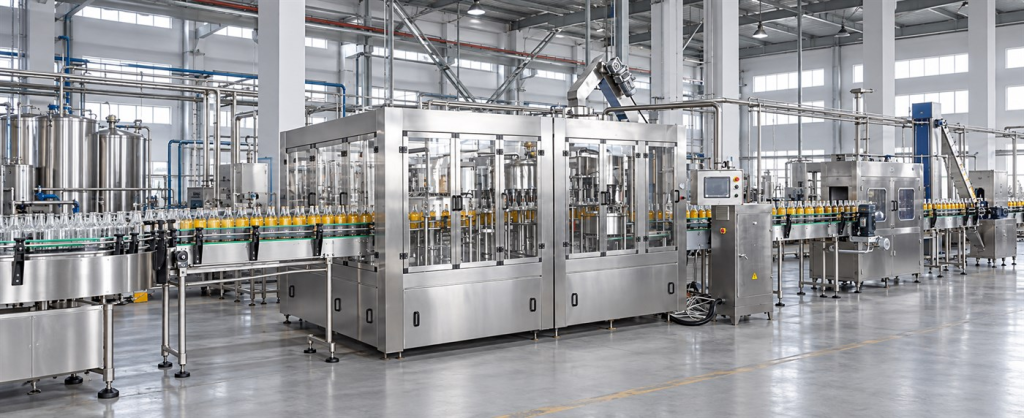
What Is a Non-Carbonated Beverage Filling Machine?
The term non-carbonated beverage filling machine sounds like one clear equipment category. In practice, it covers several different processes.
Still water is usually filled at room temperature. Because there is no dissolved CO2 to retain, a gravity or atmospheric filling process is often suitable.
Juice and tea are different. Depending on the recipe and shelf-life plan, they may need hot filling, low-vacuum filling, or another hygienic process. A product containing pulp or fibers may also need wider passages and valves that are easier to clean.
So a water filler should not automatically be treated as a general-purpose machine for every still beverage. If bottled water is your main product, our guide on how to choose a water filling machine goes deeper into bottle specifications, capacity, hygiene, and line planning.
Carbonated vs Non-Carbonated Filling Machines: Key Differences
| Comparison point | Carbonated filling machine | Non-carbonated filling machine |
|---|---|---|
| Typical beverages | Soda, sparkling water, carbonated juice drinks | Still water, juice, tea, functional beverages |
| Common filling method | Isobaric or counter-pressure filling | Gravity, atmospheric, low-vacuum, or hot filling |
| Pressure | Controlled to retain CO2 | Usually not controlled for carbonation |
| Product temperature | Commonly kept cold | May be ambient or hot |
| Main filling concern | Foam, CO2 loss, and unstable fill levels | Hygiene, oxidation, temperature, and product handling |
| Common upstream systems | Mixing, chilling, and carbonation | Water treatment, blending, heating, or sterilization |
| Container requirement | Must handle the intended carbonation pressure | Must suit the product and filling temperature |
| Valve and tank design | Built for pressurized product and gas control | Selected for water, juice, tea, or another still liquid |
This table is a useful starting point, not a finished machine specification. The final setup still depends on the recipe, container, cap, target output, and conditions inside the factory.
Pressure Is the Biggest Technical Difference
Open a warm bottle of soda and the problem is easy to see. CO2 leaves the liquid quickly when temperature rises or pressure drops. The same thing can happen inside a filling machine, only faster and during every filling cycle.
Too much gas release creates foam. That foam slows the process, affects the fill level, and may leave sticky product around the valve or bottle neck.
An isobaric filling machine controls the pressure change. The product tank, valves, gas circuit, and filling sequence work together so the beverage enters the container more gently. A conventional still-water filler is not designed for that job.
Non-carbonated products bring different problems. Water is relatively straightforward. Juice or tea may oxidize, contain pulp, or require hot processing. The engineering focus moves away from CO2 retention and toward temperature, flow, hygiene, and cleaning.
Filling Temperature Affects the Whole Process
Carbonated beverages are normally filled cold because lower temperature helps keep CO2 dissolved and reduces foam. The exact temperature depends on the product formula and process design, so it should be confirmed before choosing the chilling and filling equipment.
Still water is commonly filled at room temperature. Juice and tea may be hot-filled when their production process requires it.
Hot filling changes more than the liquid tank. Seals, pipes, filling valves, bottle material, cooling equipment, and cleaning procedures all need to suit the operating temperature. A PET bottle made for cold-filled soda may deform in a hot-fill process unless it was designed for that use.
Before looking at machine models, confirm whether the beverage is carbonated and what temperature it will have at the filling valve. Those two details can rule out many unsuitable configurations immediately.
Filling Valves and Product Tanks
Buyers often compare machines by the number of filling heads. It is an easy number to put in a quotation, but it does not tell you whether the machine suits the beverage.
For carbonated drinks, the valve has to manage pressurization, liquid flow, and gas release without causing unnecessary turbulence. The tank and connected product circuit must also operate at the required pressure.
A still-water filler can use a simpler arrangement. Juice and tea may need valves designed for hot product and frequent cleaning. If the recipe contains pulp or particles, passage size matters too. A narrow product path can restrict flow and leave areas that are difficult to clean properly.
Ask the supplier to explain the filling sequence. How is the container pressurized? Where does the gas go? How is the liquid level controlled? Which parts touch the beverage, and how are they cleaned? These answers are more useful than the valve count by itself.
The Container Is Part of the Filling Process
The same machine can behave very differently with different bottles.
Carbonated PET bottles need enough pressure resistance for the intended carbonation level. Glass bottles and cans require their own handling and sealing systems. Neck finish, bottle base, wall distribution, cap type, and closure torque all affect how smoothly the line runs.
Hot-filled products put a different kind of stress on the package. The bottle has to tolerate the filling temperature and the changes that happen during cooling. Lightweight water bottles have another issue: they may become unstable while passing through the filler, conveyors, labeler, or packer.
Send a drawing if you have one. Physical samples are even better. Include the cap, neck finish, bottle dimensions, preform details, and every size you expect the line to handle.
Do Not Select the Filler in Isolation
A carbonated drink line may need treated water, syrup preparation, mixing, chilling, and carbonation before the beverage reaches the filler. After capping, the containers may pass through inspection, coding, labeling, packing, and palletizing.
A still-water line usually starts with water treatment. Depending on the factory, it may also include bottle blowing, air conveying, rinsing, filling, capping, labeling, and packing. A juice or tea line may add blending, heating, sterilization, bottle inversion, and cooling.
All of these sections need compatible output. A high-speed filler is not useful if the labeler, bottle blower, or packing machine keeps stopping the line. The same applies to cap feeding and conveying.
Can One Machine Fill Both Carbonated and Non-Carbonated Drinks?
Sometimes, but it should never be assumed.
A specially engineered machine may support more than one beverage process. That does not mean a standard filler can move from soda to water or hot-filled juice with a few settings changed on the control panel.
Tank pressure, valve sequence, product temperature, cleaning requirements, utilities, and containers may all change. Changeover time matters as well. A machine is not truly flexible if it takes too long to clean, reconfigure, and return to stable production.
If you plan to make several beverages, give the supplier a complete product list. Include the products you make now and any future products you genuinely expect to launch. The supplier can then decide whether one configurable system makes sense or whether separate process sections would be easier to operate.
For factories producing carbonated drinks and hot-filled juice regularly, dedicated configurations are often more practical. There is less compromise, and operators have fewer process changes to manage.
How to Choose the Right Filling Machine
You do not need to choose a model first. Start with the product and work outward from there.
Define the Beverage
List every product the line must handle. State whether it is carbonated, its intended CO2 condition, the filling temperature, and whether it contains pulp, fibers, or particles.
This sounds basic, but vague product information is one of the main reasons buyers receive quotations that are difficult to compare.
Confirm the Bottle or Can
Specify PET bottle, glass bottle, or can. Include the volume, dimensions, neck finish, cap or closure type, and all formats planned for the line.
If several bottle sizes will share one machine, ask how changeover works and which parts must be replaced.
Calculate Realistic Output
Provide the required bottles or cans per hour, but do not stop there. Daily output, working hours, number of shifts, cleaning time, and product changeovers matter too.
Ask what container and operating conditions were used for the quoted speed. A machine may not produce the same output with every bottle size.
Define the Complete Process
Tell the supplier which systems are already available and which ones are needed. A carbonated project may require mixing, chilling, and carbonation. Juice or tea may need preparation, heating, sterilization, and cooling.
If this is a new factory, planning the complete line together usually makes capacity matching much easier.
Check the Factory and Utilities
Machine selection also depends on the available space, electrical supply, water, compressed air, refrigeration, drainage, and local environmental conditions.
A technically suitable machine can still be a poor choice if the factory cannot support its utility demand or provide enough space for operation and maintenance.
Compare the Full Scope, Not Just the Price
Check whether the quotation includes conveyors, change parts, cap feeding, inspection devices, coding, installation, commissioning, training, technical documents, and spare parts.
The lowest filler price may not be the lowest project cost. Missing equipment and unclear service scope tend to show up later, when changes are more expensive.
What to Send Before Requesting a Quotation
Prepare the following information:
- Beverage type and basic recipe category
- Carbonation requirement or target CO2 condition
- Filling temperature
- Viscosity, pulp, fibers, or particles, if present
- PET bottle, glass bottle, or can
- Bottle drawing, neck finish, and cap sample
- Package sizes and expected changeover frequency
- Required bottles or cans per hour
- Daily output and working shifts
- Existing upstream and downstream equipment
- Factory layout and available utilities
- Destination market and required standards
For a carbonated beverage, start with equipment designed to manage pressure, temperature, and foam. For water, juice, or tea, define the actual process instead of asking for a generic non-carbonated filler.
Frequently Asked Questions
What Is the Main Difference Between Carbonated and Non-Carbonated Filling Machines?
Pressure control is the main difference. Carbonated filling equipment normally uses an isobaric or counter-pressure process to reduce CO2 loss and foam. A non-carbonated machine uses the process that suits the beverage, such as gravity filling for still water or hot filling for certain juice and tea products.
Why Are Carbonated Drinks Usually Filled Cold?
Lower temperature helps keep CO2 dissolved in the beverage. This reduces foam and makes filling more stable. The actual temperature still depends on the formula and line design.
Can a Water Filling Machine Fill Carbonated Water?
Do not assume that it can. A standard still-water filler usually does not have the pressure-control process needed to retain CO2. Carbonated water requires a suitable filler, container, and filling sequence.
Can the Same Non-Carbonated Machine Fill Water and Juice?
Not always. Still water is commonly filled at room temperature, while juice may require hot filling, low-vacuum filling, or additional hygienic treatment. The recipe and shelf-life process should be reviewed first.
What Information Should I Send a Filling Machine Supplier?
Send the beverage type, carbonation requirement, filling temperature, container and cap specifications, required output, factory layout, utilities, and details of any equipment already installed. Bottle drawings and physical samples are especially helpful.